Updated June 2026
Plug-in Solar Panels UK: Complete 2026 Guide
Balcony and plug-in solar is the fastest-growing solar category in the UK. Whether you rent, own a flat, or simply want a low-commitment start with solar, this guide covers everything — from legal rules to real-world savings.
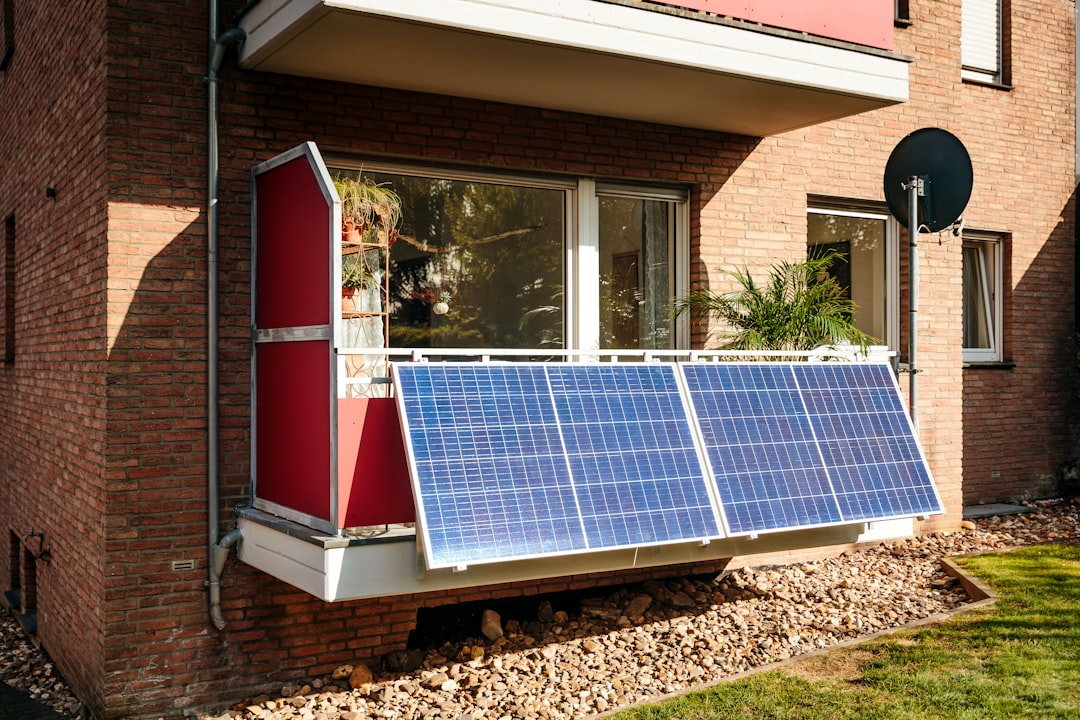
Photo: Yuma Solar / Unsplash
Quick Answer
Plug-in solar panels (also called balcony solar or micro-inverter systems) are legal in the UK under the G98/G99 notification scheme. A typical 600W kit costs £300–£600 and generates around 500–700 kWh/year, saving £150–£200 annually at current electricity prices.
What Are Plug-in Solar Panels?
Plug-in solar panels are compact photovoltaic systems that generate electricity and feed it directly into your home's wiring through a standard household socket. Unlike a conventional rooftop solar installation — which requires MCS-certified installers, scaffolding, a dedicated inverter cabinet, and formal grid connection paperwork — a plug-in kit typically consists of one or two solar panels, a micro-inverter, a short DC cable, and a mains plug. A single person can install the whole thing in an afternoon.
The micro-inverter is the key component. It sits between the panels and your socket and converts the panels' direct current (DC) electricity into 230V alternating current (AC) that matches your home's supply. When sunlight hits the panels, electricity flows into your ring main and your household appliances draw from it first — reducing how much you pull from the grid. Your electricity meter slows down or, at peak output on a sunny afternoon, may stop entirely.
These systems go by several names: balcony solar, micro solar, plug-and-play solar, or the German term Balkonkraftwerk (balcony power station). Germany has over 500,000 registered units in service — the UK is several years behind but demand is accelerating rapidly, with search interest spiking to 74,000 monthly searches in early 2026.
There are three broad mounting variants suitable for different properties:
Balcony Rail Mount
Panels clamp onto balcony railings with no drilling. Ideal for flats and apartments. South-facing balconies give optimal output.
Roof Hook / Flat Roof
Freestanding A-frame or ballasted mount on a flat roof or low-pitch area. No structural fixings required. Popular with terraced house owners.
Garden Ground Stake
Freestanding ground frame that stakes into soil or gravel. Fully portable and repositionable. Best for renters who want to take the system when they move.
A G98-compliant micro-inverter includes anti-islanding protection — a critical safety feature that automatically disconnects the system if the grid goes down, preventing your panels from energising a line a DNO engineer believes is dead. Always verify this is present before buying.
Are Plug-in Solar Panels Legal in the UK?
Yes — plug-in solar panels are entirely legal in the UK. The regulatory framework is the G98/G99 Engineering Recommendation, which governs how small generating devices connect to the low-voltage distribution network. Systems up to 3.68kW per phase (which covers all domestic plug-in kits) may connect under the simplified G98 self-notification process, while larger installations require a full G99 application.
The UK has not yet introduced a specific statutory limit equivalent to Germany's 800W "Balkonkraftwerk" regulation, but the practical limit for a single-phase plug-in system on a 13A socket is approximately 3kW continuous load — well above the output of any current domestic plug-in kit.
Key Legal Rule
- 1. You must notify your Distribution Network Operator (DNO) before connecting any generating device to the grid.
- 2. Notification must be submitted within 28 days of connection (best practice: notify before plugging in).
- 3. The process is free and done entirely online via your DNO's portal. Most acknowledge within 5–10 working days.
- 4. The 3.68kW per phase limit applies to the total generating capacity at your property under G98 — so if you already have rooftop solar, factor that in.
- 5. All equipment must carry CE or UKCA marking and comply with BS EN 62109 (safety standard for power conversion equipment).
Your DNO is the company that owns the cables delivering electricity to your street — not your energy supplier. Find yours at energynetworks.org. Keep the notification confirmation email for your home insurance records; connecting without notification does not create criminal liability but can invalidate an insurance claim in the event of an electrical incident.
For systems above 3.68kW per phase, a full G99 application is required. This involves the DNO formally assessing your connection and may take several weeks. Most domestic plug-in kits (400W–800W) are well within G98 territory, but if you plan to expand in future, check your total capacity before installing additional panels.
Costs and What You Get
Plug-in solar kit prices have fallen sharply over the past two years as Chinese manufacturing has scaled up and UK retailers have increased competition. A complete kit — panels, micro-inverter, mounting hardware, and cable — now starts at under £300 for entry-level 400W systems. The table below shows representative prices as of June 2026.
| Kit size | Panels | Est. annual output (UK avg) | Typical cost | Where to buy |
|---|---|---|---|---|
| 400W | 1 × 400W mono | 300–380 kWh | £199–£350 | Amazon, Screwfix, specialist retailers |
| 600W | 2 × 300W mono | 500–600 kWh | £299–£549 | Amazon, Blaupunkt, Deye dealers |
| 800W | 2 × 400W mono | 650–820 kWh | £449–£750 | Anker, EcoFlow, Amazon |
| 1kW+ | 3–4 panels or 2 × 500W | 800–1,100 kWh | £650–£1,200 | EcoFlow PowerStream, specialist suppliers |
Annual output figures assume a south-facing install at approximately 35° tilt in central England. East/west-facing installs will produce 15–20% less; installations in Scotland will produce 10–15% less than the same system in southern England. Vertical balcony mounting (90°) loses around 25–30% compared to the optimal tilt.
Note that kits above 800W are available and legal in the UK under G98 (the 3.68kW per phase limit covers all these sizes), but plugging more than ~3kW into a standard 13A socket continuously is not recommended without an electrician's assessment of the circuit.
How Much Can You Save?
The savings calculation for a 600W plug-in system in central England is straightforward. Using PVGIS irradiance data for a south-facing 35° installation:
600W system × approximately 4 peak sun hours/day average × 365 days = ~876 kWh/year (real-world figure accounting for winter losses and efficiency: approximately 540–600 kWh/year).
At the current Ofgem price cap rate of 24p/kWh, that equates to ~£130–£144/year in avoided electricity costs. On a premium tariff at 28p/kWh, the saving rises to ~£150–£168/year.
With a kit cost of £400, simple payback is approximately 2.5–3 years — one of the best payback periods of any home energy investment.
The chart below shows estimated monthly generation from a 600W south-facing system in central England (Midlands/London), using PVGIS data. Output is heavily skewed towards summer — over 65% of annual generation occurs April through August.
Monthly generation — 600W plug-in solar, south-facing 35°, central England (kWh)
Annual total: approximately 539 kWh. Source: PVGIS irradiance data, central England.
The key insight from the chart: do not judge plug-in solar by its winter performance. November through February together contribute only around 60 kWh — less than two months of summer output. The system earns its keep between April and September.
To maximise your savings, shift daytime electricity consumption to coincide with peak generation. Running a dishwasher, washing machine, or tumble dryer during sunny midday hours rather than in the evening directly captures the solar output at full import value rather than letting it flow back to the grid unmetered.
Best Plug-in Solar Panels UK 2026
The UK plug-in solar market has matured considerably since 2023. The following products represent the most widely reviewed and recommended options for British conditions, balancing price, build quality, warranty, and UK-specific compliance.
| Brand / Model | Wattage | Approx. price | Pros | Rating |
|---|---|---|---|---|
| Anker SOLIX RS40P | 400W / 800W | £399 / £699 | App monitoring, 23% panel efficiency, UK warranty support, IP67 inverter | ★★★★★ |
| EcoFlow PowerStream | 800W | £899 (with 2 × 400W) | Battery storage integration, excellent app, expandable, smart home compatible | ★★★★★ |
| Hoymiles HM-600 | 600W | £420–£520 (kit) | Industry-trusted micro-inverter brand, UKCA certified, DTU monitoring dongle available | ★★★★½ |
| Jackery SolarSaga 200W × 2 + PowerStation | 400W | £599–£799 | Portable, battery included, no DNO notification needed (off-grid storage only), ideal for renters | ★★★★ |
| Blaupunkt BLP-BSP-600 | 600W | £549 | All-inclusive kit with mounting bracket, wide UK retail availability, competitive price | ★★★★ |
Buying tip: Always verify that the micro-inverter carries CE or UKCA marking and explicitly states G98 compliance and anti-islanding protection. Avoid any kit sold without visible compliance documentation — cheap unbranded inverters from overseas marketplaces may lack these critical safety features.
Installation Tips
Most plug-in solar kits can be installed by a confident DIYer in two to four hours. These tips will help you get the most from your system.
Orientation and Angle
South-facing is best — it captures sunlight from morning through afternoon and maximises annual yield. Southeast and southwest orientations lose only 5–10%. A tilt angle of 30–45° from horizontal is optimal for the UK. Vertical mounting (e.g., flat against a balcony railing) reduces output by roughly 25–30% but is still worthwhile if south-facing.
Avoid Shadows
Even partial shading dramatically reduces micro-inverter output. Before finalising your mounting position, check for shadows from chimneys, neighbouring buildings, trees, and satellite dishes at different times of day — especially in winter when the sun sits low on the horizon. A shadow covering just 20% of one panel can cut output by 50% or more on string-wired systems; quality micro-inverters mitigate this somewhat but cannot eliminate it entirely.
Mounting Options
Balcony Rail Clamps
No drilling. Clamp brackets grip railings of 20–60mm diameter. Panel sits at a fixed angle — choose a kit whose bracket angle suits your balcony orientation.
Roof Hooks / A-Frame
Freestanding A-frame or weighted ballast mount on a flat or low-pitch roof. Angle is adjustable. Check your roof can bear the combined panel and frame weight (typically 25–35kg total).
Ground Stakes
Steel ground stakes hammered into lawn or gravel. Fully portable — ideal for renters. Position can be adjusted seasonally to track the sun's changing angle. Ensure cable can reach the nearest socket safely.
Cable Routing and Socket
Route the AC cable through a window or door seal — never under carpet or through walls unless it is armoured cable. Plug into a dedicated 13A socket in good condition, not a multi-way extension lead. Inspect the socket and plug annually for signs of heat discolouration. Notify your home insurer that you have installed the system.
Do I Need Planning Permission?
In the vast majority of cases, no — plug-in and balcony solar panels fall within Permitted Development rights in England, Scotland, and Wales. The key conditions are that the installation must not project more than 200mm beyond the roof or wall surface when measured perpendicular to it, and must not be installed on a listed building or within a designated area without prior approval.
Under 50m² of solar panels on a residential roofline is generally considered permitted development in England. Wales introduced solar-specific permitted development relaxations in 2023, making it even easier for homeowners there. Northern Ireland follows similar principles; check with your local council for the most current guidance.
When you DO need to check
- —Listed buildings: Grade I, II* and in some cases Grade II listed buildings require Listed Building Consent for solar panels visible from a public highway. Check before installing.
- —Conservation areas: Panels visible from the street may require planning permission in designated conservation areas. Contact your Local Planning Authority.
- —Leasehold flats: Many leases require freeholder consent for exterior alterations. A freestanding garden or balcony setup without permanent fixings is usually the least contentious approach.
- —Article 4 directions: Some local councils have withdrawn permitted development rights in specific streets or areas. Check the planning portal for your postcode.
If in doubt, submit a Lawful Development Certificate application — a simple, low-cost process that gives you written confirmation that your installation is permitted development. This is particularly useful for leasehold flat owners who need documentation for their freeholder.
Smart Export Guarantee and Plug-in Solar
The Smart Export Guarantee (SEG) requires licensed energy suppliers with over 150,000 customers to offer export tariffs — paying you for electricity you export to the grid. For a full rooftop system, SEG typically earns 5–15p/kWh on exported units.
The situation for plug-in solar is more complex. To register for SEG, you generally need:
- —An MCS-certified installation (most plug-in DIY kits cannot be certified this way)
- —A smart meter with half-hourly export metering
- —A generation meter or certified inverter with verified output data
In practice, most plug-in solar homeowners do not register for SEG and simply focus on self-consumption. The complexity and administrative overhead of the SEG registration process outweighs the potential earnings from a 600W system — at most a few pounds per month even in summer, against the bill-reduction value of self-consumption at 24–28p/kWh.
Unregistered surplus electricity from a plug-in system flows back through your meter to the grid. With a traditional credit meter this actually reduces your apparent consumption (your meter effectively runs backwards), which may benefit you. With a modern smart meter, surplus export is typically recorded but not paid unless you are SEG-registered. Some energy suppliers have started offering simplified export tariffs for small generators — check with yours whether a plug-in system qualifies.
Bottom line: Focus on self-consumption first. Time your appliance use to coincide with peak generation. If you upgrade to a full MCS-certified rooftop system in future, SEG registration becomes straightforward and worthwhile.
How a Plug-in Solar System Works
The diagram below shows the complete flow of electricity in a plug-in solar system — from sunlight hitting the panel through to your household appliances drawing on the generated power.
A plug-in solar system feeds 230V AC directly into your home ring main. Appliances draw from solar first; the grid supplies any remaining demand.
The beauty of this setup is its simplicity. There are no batteries, no charge controllers, and no dedicated circuits required. The micro-inverter's grid-synchronisation feature means it automatically adjusts its output to match your home's supply, and the anti-islanding protection shuts it down if the grid fails.
Frequently Asked Questions
Can I take plug-in solar panels with me when I move? ▼
Yes — portability is one of the biggest advantages of plug-in solar over a full rooftop installation. Systems mounted with rail clamps or ground stakes leave no permanent fixings and can typically be disassembled and transported in a car within 30 minutes. You will need to submit a new G98 DNO notification at your new address, but this is free and straightforward. The panels themselves are rated for 25+ years and will continue generating at your next property.
What's the maximum size plug-in solar system I can have? ▼
Under the G98 simplified notification process, the limit is 3.68kW per phase at your property — which means a single-phase home can have up to 3.68kW of total generating capacity (including any existing rooftop solar). For most homes with no existing solar, you could legally install up to around a 3.5kW plug-in system, though the practical limit of a 13A socket is approximately 3kW continuous. Systems above 3.68kW per phase require a full G99 application with your DNO. Most off-the-shelf kits are 400W–800W, well within the limit.
Do I need an electrician to install plug-in solar? ▼
No — plug-in solar systems are specifically designed for DIY installation and do not require a qualified electrician. The G98 notification to your DNO is a self-service process, not an electrician sign-off. However, if you have any doubts about the condition of your wiring or sockets, or if you want written confirmation for insurance purposes, an hour with a Part P registered electrician is worthwhile. It is also advisable to consult an electrician before installing systems larger than 800W or if you plan to use a socket that is not on a modern ring main.
Can I use plug-in solar panels in a flat? ▼
Yes — flats are one of the primary use cases for plug-in solar. A south-facing balcony is ideal: clamp-mounted panels require no drilling and can be removed without trace. If your flat has no balcony, a south-facing window-sill mount or a panel in a south-facing private garden or patio also works. Leaseholders should check their lease before installing anything on the exterior of the building; if permanent fixings are prohibited, a freestanding garden frame avoids the issue entirely. Renters should obtain written landlord consent for any exterior installation as a precaution.
What happens to excess electricity from plug-in solar? ▼
When your plug-in system generates more electricity than your household is using at that moment, the surplus flows back through your meter and into the local grid. With a traditional credit meter this effectively reduces your recorded consumption. With a smart meter, the export is recorded but not paid unless you are registered under the Smart Export Guarantee — which most small plug-in solar owners are not, due to the MCS certification requirement. The best way to avoid wasting surplus is to run high-consumption appliances (dishwasher, washing machine, EV charger) during peak solar hours, ideally timed via a smart plug or smart appliance schedule.